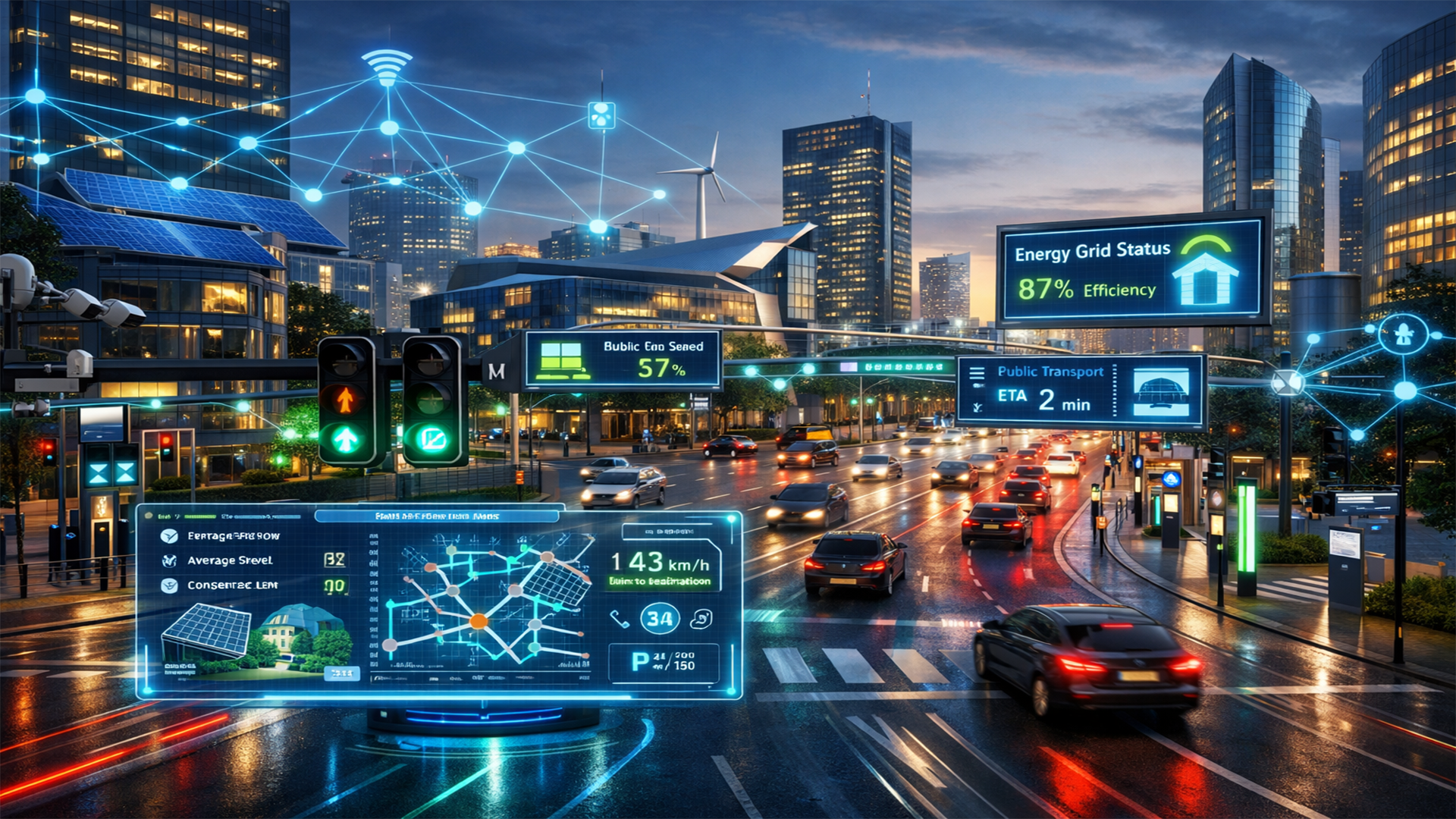
🚦 Welcome to the Future: Your City Is Getting a Brain Upgrade
Imagine living in a city where traffic jams are extinct, waste bins call for pickups themselves, and the air you breathe is cleaner thanks to invisible digital guardians. Wild? Not anymore. AI-powered smart cities are racing from sci-fi fantasy straight into reality and you might be living in one sooner than you think.
🏙️ What Exactly Is a Smart City (and Why Should You Care)?
A smart city uses data, sensors, and artificial intelligence to turbocharge everything from transit to utilities. It’s all about making urban life safer, greener, and more efficient.
- 🚌 Traffic lights powered by real-time AI adjust to actual road conditions.
- 🗑️ Smart bins signal for pickups only when full, slashing unnecessary truck routes.
- 💡 Streetlights dim when no one’s around, saving energy for the planet (and your city budget!).
- 🌳 AI monitors air quality and predicts pollution spikes sometimes before they happen.
In short: Your city’s turning into a high-tech playground, and you’re the main character.
🔍 The AI Engines Behind the Magic
So what’s under the hood? These urban upgrades use machine learning, computer vision, and sensor fusion to create a nervous system for the city.
- 📡 IoT Sensors: Feeding real-time data on everything from crowds to potholes.
- 🧠 Predictive Algorithms: Spotting trends think crime patterns or peak pollution hours before they spiral out of control.
- 🚨 Automated Response Systems: Calling in fire trucks, ambulances, or even drones at the first sign of trouble.
✨ Case Study: Seoul, South Korea
Seoul’s AI monitors 60,000 security cameras in real time, predicting emergencies and dispatching help faster than ever. Result? Crime rates down, emergency response times up to 30% faster.
🧑💼 How Will Smart Cities Change Your Daily Life?
- 🚉 No more guessing transit times: Buses and trains update in real-time no more missed connections.
- 🚗 Parking? AI finds you a spot and reserves it (goodbye endless circling downtown).
- 🛡️ Safer streets with predictive policing think more presence where it matters, less hassle for law-abiding citizens.
- 💧 Zero leaks: Water pipes monitored 24/7 to prevent costly bursts or waste.
Bottom line: More time for coffee, less time stuck in urban chaos.
🌱 Can AI Really Make Cities Greener?
Short answer: Yes. Big time.
- ⚡ Dynamic energy grids adjust output based on real-time demand, slashing waste and emissions.
- 🚌 AI-optimized buses reroute instantly to avoid congestion, cutting fuel use and commuter stress.
- 🌞 Renewable energy gets smarter, integrating sun, wind, and storage with AI-powered timing.
💰 The Economic Upside: Smarter Cities, Fatter Wallets
McKinsey estimates smart cities could unlock $2 trillion in annual economic benefits by 2025.
- 💼 Job creation: think data analysts, AI urban planners, and drone operators.
- 💸 Lower taxes: efficiency means cities spend (and waste) less.
- 🏢 New startups: from mobility-as-a-service to app-driven city guides, innovation’s about to explode.
🛡️ The Catch: Privacy vs Progress
Let’s be real: When sensors are everywhere, privacy gets complicated. Cities must balance surveillance with civil rights.
- 🔒 Robust data protection is a must.
- 🤝 Transparent citizen engagement will make or break trust in the system.
Smart cities must be not just high-tech, but also high-trust.
🚀 What’s Next? Will You Live in a Smart City Soon?
The smart city revolution isn’t coming it’s already here. From Singapore to Toronto, urban AI is scaling up fast.
- 🌍 Global race: The smartest cities will attract the best talent (and the happiest residents).
- 🏛️ Policy innovation: New laws and public-private partnerships will shape how tech touches your life.
Ready to see your city get a whole lot smarter? Buckle up the high-tech urban age is here, and you’re at the center of it.
✨ Final Thought
Will your next move be to a city that thinks for itself? Don’t blink the future is already building itself, one data point at a time.